When it comes to first-line gout treatment, colchicine is routinely prescribed as a generic 0.6mg pill or capsule in combination with urate lowering therapy (ULT) to make ULT tolerable.
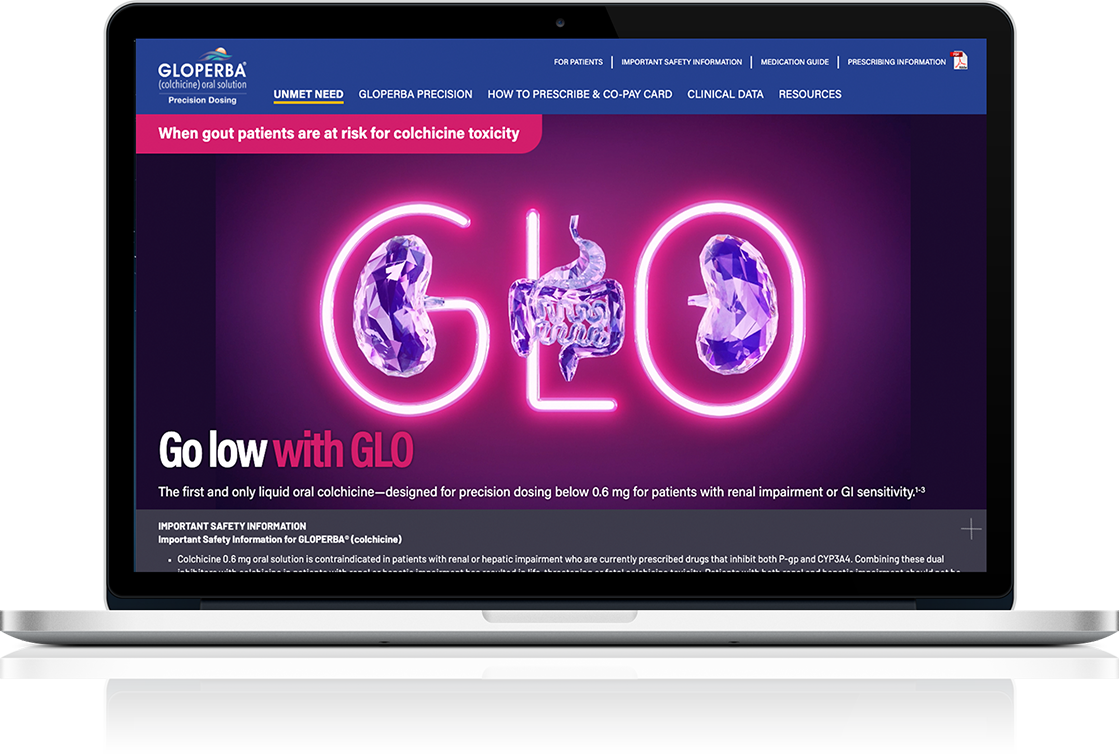
Website
CHALLENGE:
Our client had a liquid colchicine product no one wanted. Market research was bleak. Physicians saw no need for a new formulation and the product was perceived as redundant, or a commercial ploy to monetize an old drug
INSIGHT:
It is well known that adherence to the standard of care (colchicine + ULT) is less than ideal. ULT makes gout symptoms worse before they get better (discontinuations) and colchicine has a narrow therapeutic window and can be highly toxic at higher doses (discontinuations).
What if the people who needed colchicine most… couldn’t take it at 0.6 mg? That led us to the at-risk gout population—patients with chronic kidney disease (CKD stages 3–4) or GI sensitivity, who are uniquely vulnerable to colchicine toxicity. These patients couldn’t tolerate the standard 0.6 mg dose. In fact, PK plasma profile data showed that patients with renal impairment remained in the toxic serum concentration zone at 0.6 mg—and didn’t dip below it until the dose dropped to around 0.3 mg. Lower doses weren’t possible with current tablet

MOA Animation
SOLUTIONS:
Rather than position the product as a one-size-fits-all colchicine alternative, we narrowed our focus—and our messaging—around “at-risk” patients. We introduced GLOPERBA not as a repackaged drug, but as the first and only liquid oral colchicine designed for precision dosing below the standard 0.6 mg dose for patients with renal impairment or GI sensitivity—to help prevent toxic increases in serum levels and GI tolerability issues—so at-risk patients could receive the strength of colchicine they needed, at the “just right” dose they could safely tolerate.
RESULTS:
By helping patients tolerate ULT (urate-lowering therapy)—which is critical for controlling long-term gout—we gave physicians a way to keep their most vulnerable patients on track, out of crisis, and out of the danger zone. And because these “at-risk” patients represent a significantportion of the gout population, this wasn’t just the right thing to do clinically—it was a smart, scalable strategy. Sometimes reframing the narrative—from “new product push” to “clinical necessity for the overlooked”—can open more doors.

Print Ad
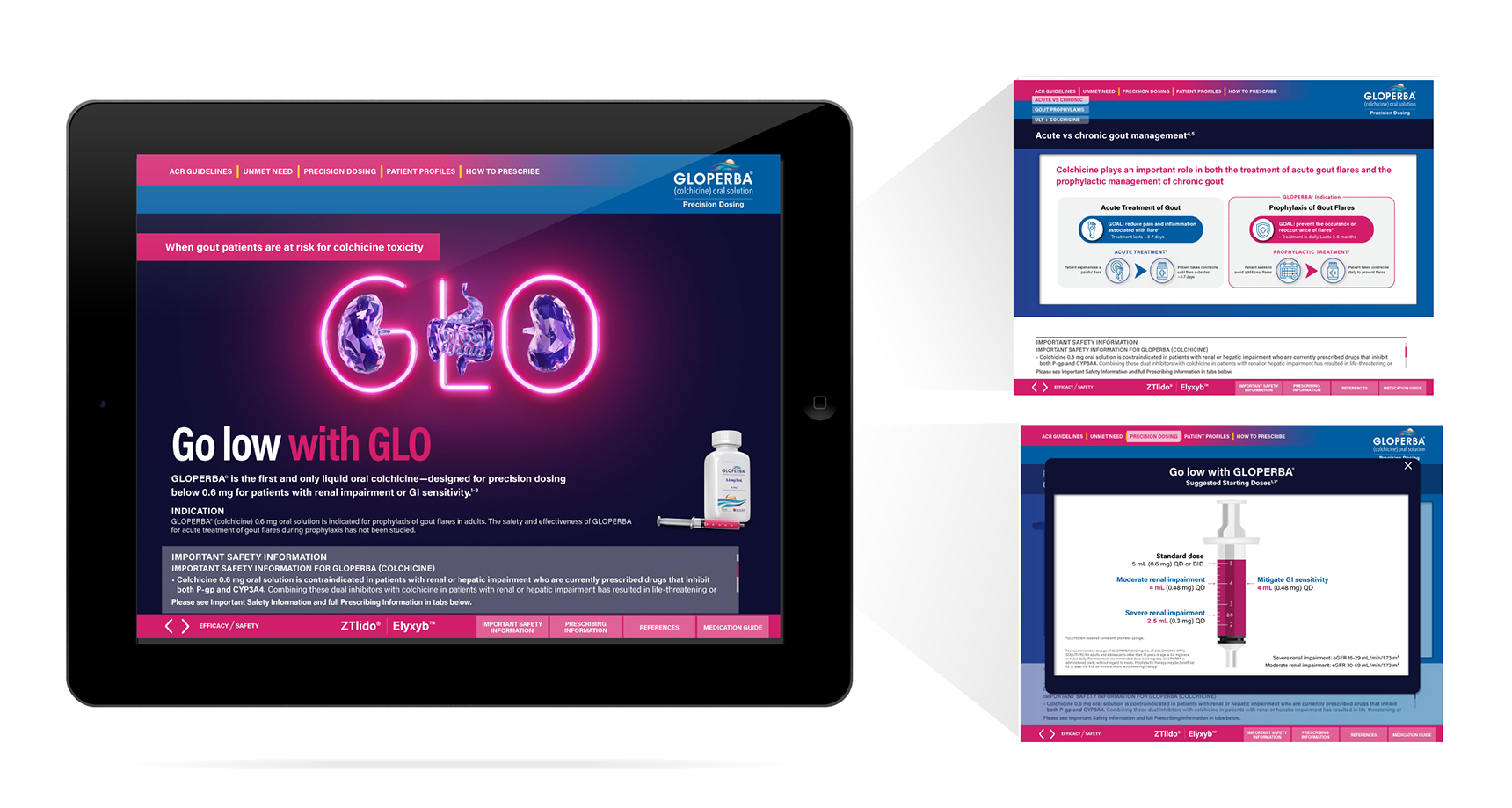
iPad eDetail Aid
You change the lives of patients. We change the lives of brands. We’re not just a marketing agency; we’re the spark that ignites brand transformation so medical device brands can outshine,
outperform, and outlast the competition.